Monitor Systems
Definition
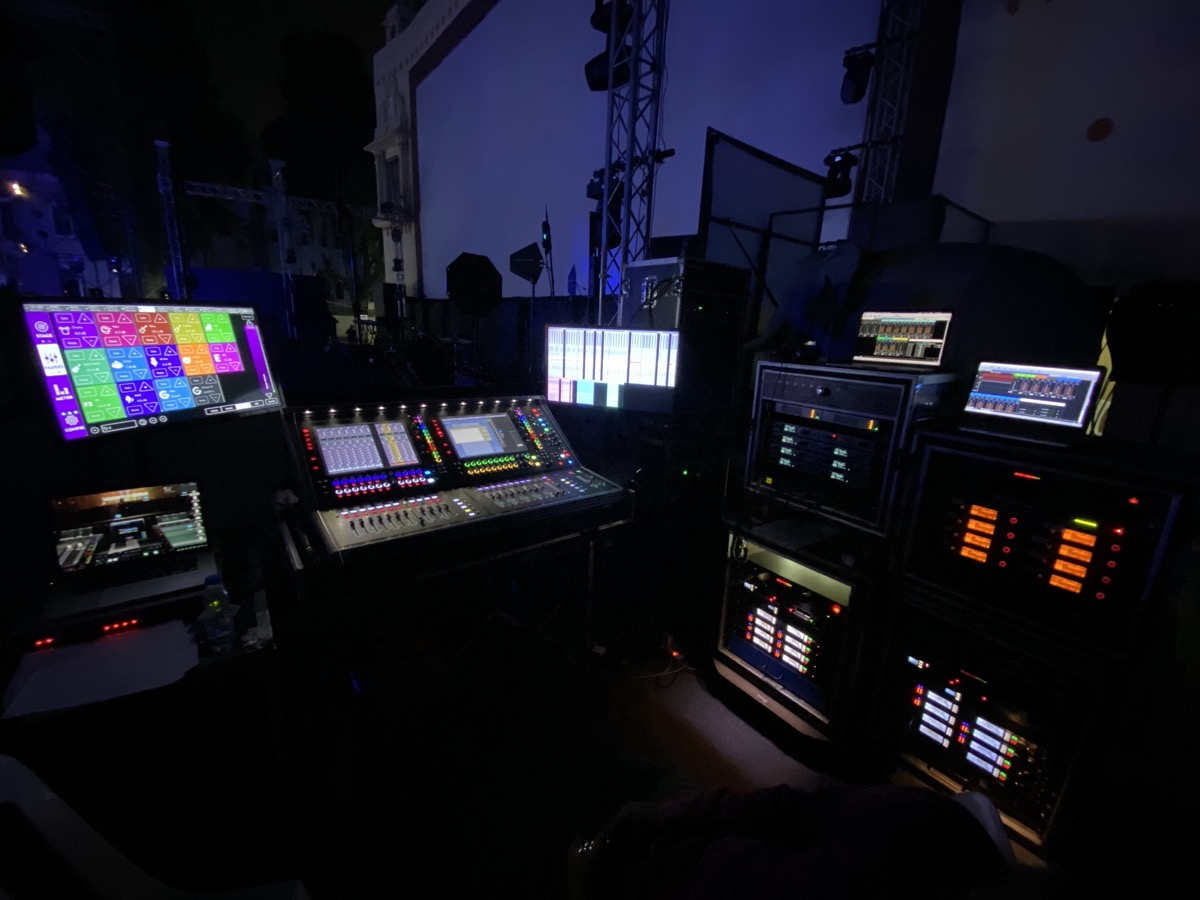
Monitors allow performers to hear themselves and the rest of the band on stage. A poor monitor mix can disturb the performance itself. Two main approaches exist. Floor wedges point at the performer from the stage and share the acoustic space with open vocal microphones, so they operate close to the feedback limit. In-ear monitors isolate the performer from the stage sound, give a consistent mix wherever the performer moves and reduce the overall stage volume. They require a reliable feed and a careful balance, because a dropout leaves the performer without any monitoring.

The guide
Feedback control on wedges relies on geometry and level. The wedge is aimed at the null of the microphone so that the microphone picks it up as little as possible, and its level is kept to what the performer needs. Before the show the monitors are rung out: the monitor send is raised until the system begins to ring, and the ringing frequency is reduced with a narrow EQ cut. Repeating the process on the problem frequencies increases the available gain before feedback.
Each performer needs a stable mix adapted to what they must hear, usually their own voice or instrument and a timing reference such as the kick drum or a click track. Common practice is to settle the monitor mixes before refining the house mix, because performers who hear themselves well play with more confidence.
The rule
The monitor mixes are stabilised before the house mix is refined.
Glossary terms
Sources
- Shure, How to Control Feedback in a Sound System : ring out, coupures étroites, gain avant larsen, orientation des retours · shure.com
- Shure, An Introduction to In-Ear Monitoring : isolation, mix personnel constant, baisse du volume de scène · shure.com
- Shure, In-Ear Monitoring: Why use Personal Monitor Systems? Montée du volume de scène avec les wedges · shure.com
- Shure, Microphone Directionality and Polar Pattern Basics : creux de directivité et placement des retours · shure.com